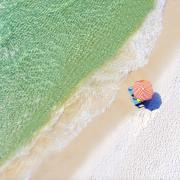
From Native Americans to plundering pirates, from summer vacationers to year-round residents, people of all sorts have flocked to the beauty and natural abundance of this coastal community for generations. Panama City Beach history is rich with vision, adventure and innovation!
Before it was settled as a community in the 1800s, the St. Andrew’s Bay area was home to many Native Americans. The abundant amount of fish in the Gulf of Mexico and Bay attracted many to our sandy white shores, as it still does today. The area is an integral part of Florida history.
Pirates also found the deep pockets of the Bay to be one of their prime spots to troll. It was there that they would lie in wait for the richly laden ships en route to Mexico or Spain. An old Spanish galleon and a 700-pound cannon were recovered from a motel site in the early 60s, proving the presence of such pirates. Legend has it that many a pirate hoarded treasure at Spanish Shanty Point on Shell Island off Panama City Beach. Who knows what treasures these emerald blue waters still hold! The Bay is also known as the “Wreck Capital of the World,” prompting many a diver to search for lost treasure beneath the waves.
Although the area was alive with settlers and development, Panama City Beach history doesn’t officially begin until May 2, 1936, when the city was founded. The city’s name was reportedly based on being the nearest American port to the newly opened Panama Canal. Surrounding the new city were other, small cities known as West Panama City Beach, Long Beach and Edgewater. Some years later, the four merged to form a single chartered government, which kept the name of Panama City Beach.
In 1935, developer Gideon Thomas built the Panama City Hotel. Thomas saw great potential in the area for tourism development at a time when most people were only concerned with harvesting crops. Many criticized his vision of Panama City Beach Fla, arguing that there was no future in what they deemed “the ugly white sand.”
Thomas, however, responded by simply stating, "I’m not attempting to grow vegetables here; I’m going to grow people." And grow people he did! Florida history was never the same after Gideon Thomas' ideas began to catch on.
Soon, the beach became a popular destination for fun-loving travelers. In the 30s and 40s the beach was known for a trendy bar called The Hangout. The white building with bright red trim was a hotspot for dancing and mingling on the beach. Unfortunately, The Hangout was destroyed by Hurricane Eloise in 1975.

Another famous landmark and part of Panama City Beach history was the Miracle Strip Amusement Park and Observation Tower. Built in the 60s, the park was a hugely popular family destination. The tower was 200 feet tall, which at the time allowed it to tower over any nearby buildings. The Strip included a popular amusement park featuring a variety of rides including a famous wooden roller coaster known as “The Starliner.”
The Tower was demolished in 1995, and the Miracle Strip Amusement Park closed its doors in 2004, although part of it remains, now known as Shipwreck Island Water Park. In its place, many family-friendly attractions and parks have sprouted up throughout the city. Growth has been booming across the beach, with Panama City Beach hotels, motels, condos and more sprouting up to accommodate all the eager travelers.
Today Panama City Beach is a premiere destination for visitors from across the world, many of whom flock to bask in the glistening beauty of what was once known as “the ugly white sand.”